
In the quiet space of an astrology or spiritual service practice, maintaining a serene and reflective atmosphere can be a priority for both the practitioner and the client. When individuals reach out for guidance, they are often navigating life transitions or seeking a space for personal reflection. As a practitioner, dedicating your focus to the thoughtful preparation and delivery of your services supports the quality of the consultation. However, the practical realities of managing a modern practice mean that administrative tasks, such as answering routine inquiries, scheduling appointments, and clarifying service details, require ongoing attention. Finding a balance between maintaining a responsive presence and protecting your time involves thoughtful planning. Establishing a digital presence that reflects the calm and focused nature of your consultation space requires careful attention to the tools you employ. By reducing the time spent coordinating time zones, confirming appointments, and sending out introductory questionnaires, practitioners can reserve their mental resources for the live sessions. Implementing automated communication tools can help manage the initial influx of questions, offering a way for clients to receive prompt responses regarding logistics. By streamlining these preliminary interactions, you have the opportunity to dedicate more energy to the substantive work of the consultation itself. When considering how to implement these systems, it helps to select software that aligns with your operational needs while respecting the nature of your practice. To review the diverse software options currently available, consulting a detailed guide to the best chatbot apps can provide practical insights into features and user interfaces tailored for service-oriented businesses.
The Role of Automated Assistants in Service Triage
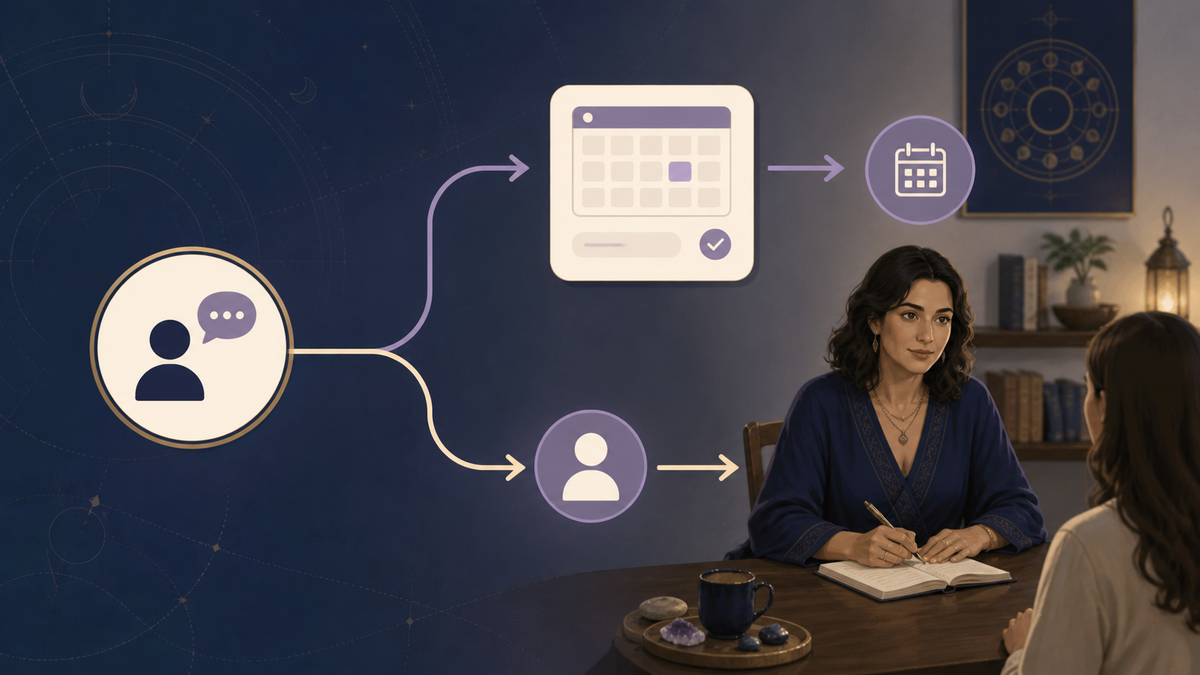
In a service-oriented practice, the initial point of contact often sets the tone for the client experience. Automated chat solutions can serve as digital assistants for sorting incoming messages. Their function should stay confined to administrative and logistical support. Depending on the selected product and its configuration, a system may answer questions about operating hours, consultation formats, pricing structures, or scheduling availability. Clearly delineating that limited role helps clients understand the structure of the practice from the outset. If a system collects preferred appointment times and basic contact details, the practitioner should review exactly what it requests and how staff will use that information. It is equally helpful to define what these systems should not do. An automated tool should not perform a reading, offer personalized advice, diagnose, or replace human judgment. The consultation itself remains a human service. The official Meta Business Suite Inbox overview describes one way businesses can manage supported Meta-channel messages. Whether a particular tool can sort or route those inquiries is a vendor capability to verify before adoption. Keeping administrative exchanges separate from the consultation can leave the live session focused on the client’s substantive questions. After a consultation time is confirmed, appointment reminders can make the next customer touchpoint clear without replacing the practitioner or coordinator’s availability check.
Setting Clear Expectations and Avoiding Misleading Claims
Transparency supports an ethical approach to client communication. When a client interacts with an automated responder, it is beneficial if it is obvious that they are speaking with a scheduling assistant, not the practitioner. Setting expectations from the first message helps prevent misunderstandings and supports a respectful environment. The introductory message can explicitly state the purpose of the automated system, such as assisting with booking and providing basic information. In addition to defining the assistant’s role, providing context about your practice methodologies helps manage expectations. Representing the capabilities of automated tools accurately is also important. The FTC’s general evidence-based advertising guidance supports avoiding claims a business cannot substantiate. In this practice, the tool’s declared scope should remain procedural rather than interpretive. Clear communication regarding the nature of your services is equally helpful. Providing foundational knowledge can help clients prepare for their session. For example, offering resources such as a background article on Mercury-themed astrology readings can show how the site frames the topic without turning the automated assistant into a reader. Establishing boundaries around both the technology and the service can support a professional environment.
Privacy, Consent, and Data Minimization

Individuals reaching out to a spiritual or astrology practice often share personal thoughts. Protecting client information is a fundamental aspect of maintaining trust. When configuring communication tools, data minimization can serve as a guiding principle. Data minimization involves collecting only the information necessary to fulfill the immediate administrative task. If an automated system is answering questions about operating hours, it does not need to ask for a birth date. If it is scheduling an appointment, it should only collect the details required to secure the time slot. The concept of data minimization extends beyond simply omitting certain questions; it also involves regularly reviewing the data you have collected. Reviewing established data protection guidelines is a beneficial practice. The Federal Trade Commission’s guide on protecting personal information emphasizes the importance of collecting and retaining only the information your business needs and taking steps to protect it. Before deploying third-party communication software, reviewing its data retention policies can help ensure they align with these principles. Furthermore, implementing a structured approach to evaluating software can support your practice. The National Institute of Standards and Technology provides a comprehensive approach to technology governance. Utilizing the AI Risk Management Framework supports a govern, map, measure, and manage risk-review approach, allowing you to systematically evaluate the privacy implications of the tools you integrate. Adopting a risk-review approach is a prudent practice when managing client information. This commitment to thoughtful administration aligns with the ethos of a reflective practice. Just as clients seek to understand internal dynamics, such as exploring a reflective overview of planetary symbolism, they also value knowing that their interactions with your practice are treated with discretion.
Practical Decision Checklist for Selecting a Messaging App
Selecting an appropriate communication tool involves a methodical evaluation of its features and limitations. Use a practical decision checklist to guide your decision-making process when reviewing potential software options for your practice.
- Clear Identification: Can the application be configured to identify itself clearly as an automated scheduling assistant in its opening greeting?
- Data Minimization Controls: Does the platform allow you to restrict the types of information collected during the initial interaction?
- Privacy Policy Alignment: Do the vendor’s data retention policies match your commitment to client confidentiality?
- Customizable Workflows: Can you program specific responses for routine inquiries regarding consultation formats, pricing, and availability?
- Human Handoff Capabilities: Can you test the mechanism to pause the automated interaction and alert a human practitioner when a complex inquiry arises?
- Software Limitations: Does the software avoid claims of advanced interpretive capabilities or diagnostic functions?
- Calendar Integration: Does the tool connect with your existing scheduling system without exposing unnecessary data?
- Routine Log Management: Does the software offer automated features for deleting conversation histories after a specified period to support data minimization?
- Clear Opt-Out Mechanisms: Is it straightforward for a user to exit the automated sequence and leave a standard email message instead?
- Accessibility Considerations: Is the chat interface designed with readability in mind, offering clear text for all clients?
Evaluating these criteria helps ensure that the technology serves as a supportive framework for administrative processes, allowing clients to access your scheduling system while maintaining appropriate boundaries.
Limitations and Human Handoff Capabilities

While automated tools offer administrative benefits, acknowledging their limitations is an important part of the setup process. These systems do not possess the capacity for empathy, nuance, or contextual understanding. They are not designed to navigate emotional situations or respond to inquiries outside of pre-programmed logistical parameters. Therefore, testing the capability to hand off interactions to a human reader is an important step. The communication workflow can be designed to recognize when an automated response is insufficient. If a client expresses distress, asks a nuanced question about a service, or requests to speak with a human, the system can be configured to pause and notify administrative staff. The transition from automated scheduling to human interaction can be designed to be straightforward. Regularly testing this handoff process by simulating different types of client inquiries helps verify that the alerts function correctly and that clients are routed to human assistance when appropriate. Maintaining this balance ensures that your practice benefits from administrative efficiency while preserving the essential human touch. Just as individuals seek reliable frameworks for personal reflection, such as exploring answers to common questions about lunar cycles and self-care, they rely on the responsive presence of a practitioner when their needs exceed simple logistics. The technology serves as a bridge for administrative tasks, supporting the human connection that defines your practice.
Frequently Asked Questions About Managing Practice Inquiries
Should an automated assistant perform preliminary readings?
No, an automated assistant should never perform preliminary readings, diagnose, or offer personalized advice. Its role is limited to administrative tasks such as scheduling, providing operating hours, and answering basic logistical questions to ensure the integrity of the consultation remains entirely human.
How can I ensure clients know they are not speaking to a person initially?
The automated system can be configured to introduce itself explicitly as a digital scheduling assistant in its very first message. Setting this expectation helps prevent misunderstandings and maintains transparent communication with your clients.
What information should the chat application collect?
The application can practice data minimization by collecting only the precise information necessary to complete the immediate administrative task, such as a name and email address for scheduling an appointment. It should not collect unnecessary background information.
What is a key capability to evaluate in a messaging tool?
A key capability to test is the handoff to a human practitioner. The system’s ability to pause automation and alert you to step into the conversation is helpful for managing complex inquiries or requests for human contact.




0 Comments